Sunday, November 3, 2024
Another peaceful night cruising south along the Dalmatian Coast from Split to Dubrovnik, Croatia. We never saw the old walled town of Dubrovnik, but we did have a very fun drive back north along the coast to learn about oyster and mussel farming, wine tasting, and olive oil production, while enjoying the beautiful coastal scenery and islands just offshore.
After we wound around on the roads to get up higher, we crossed the interesting suspension bridge we could see above us from the ship. We reached the village of Ston and the harbor of Mali Ston, about 35 miles north, located on the innermost end of the Malo bay, about 15 miles long. Because of its length and distance from the sea, its salinity is much lower due to the addition of fresh mountain water along the bay. It is the perfect blend of salty and sweet water and perfect for the oysters and mussels that are farmed there, none of which are distributed out of the area. They are all consumed by the families who live there and the local restaurants.

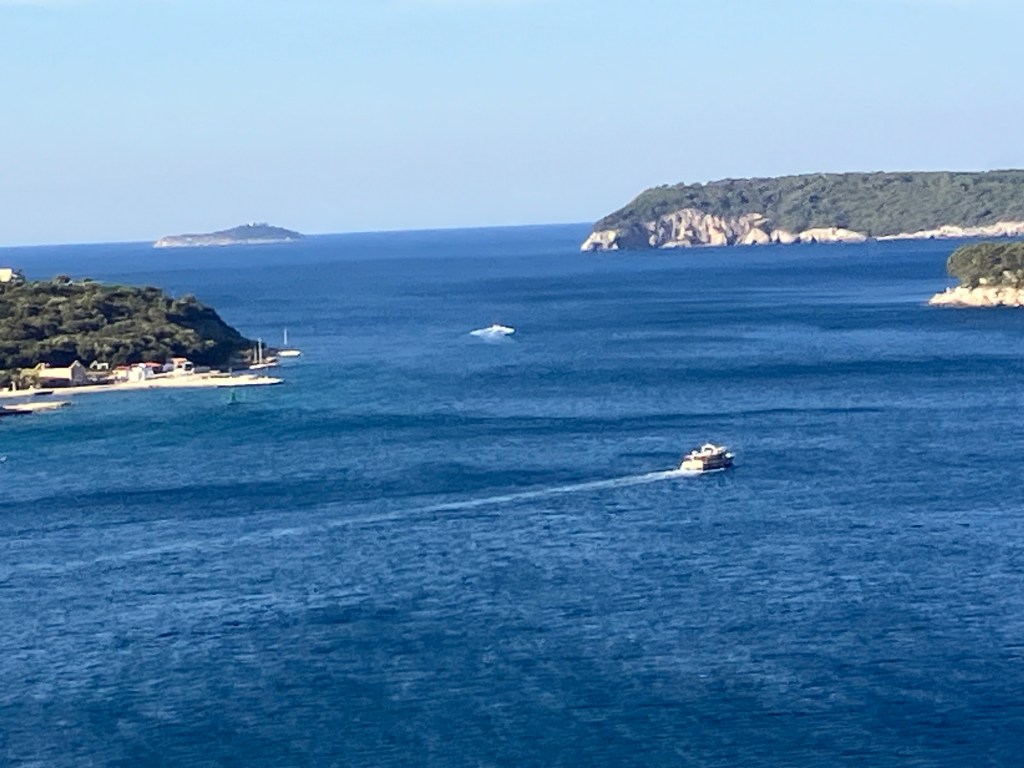
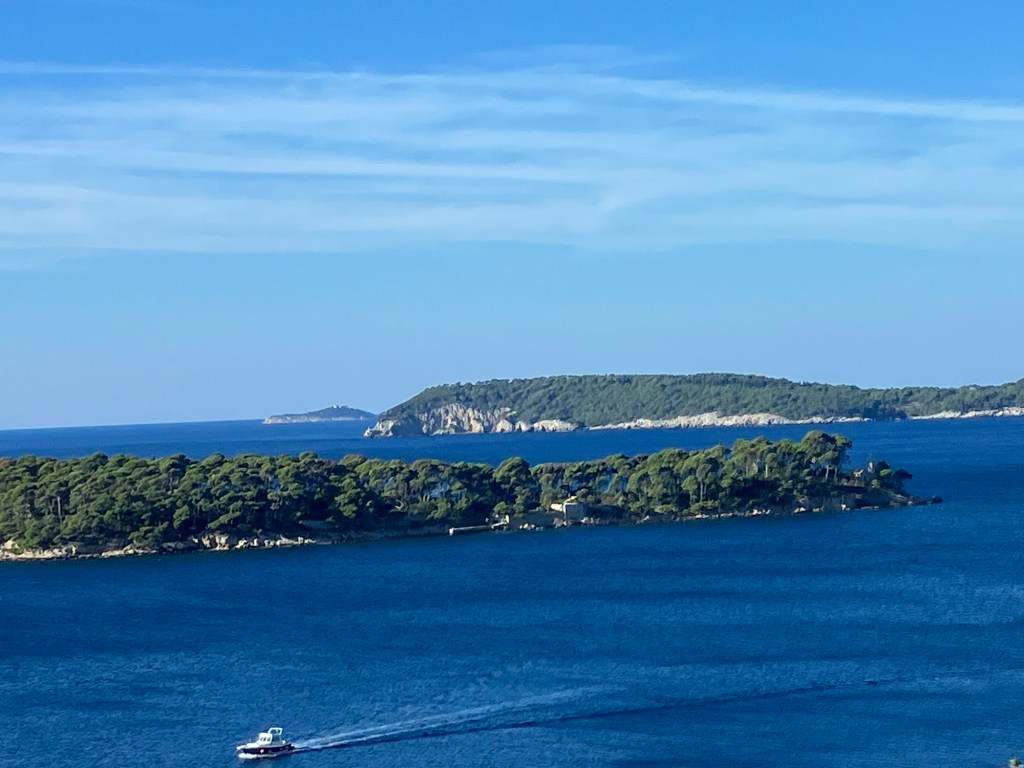
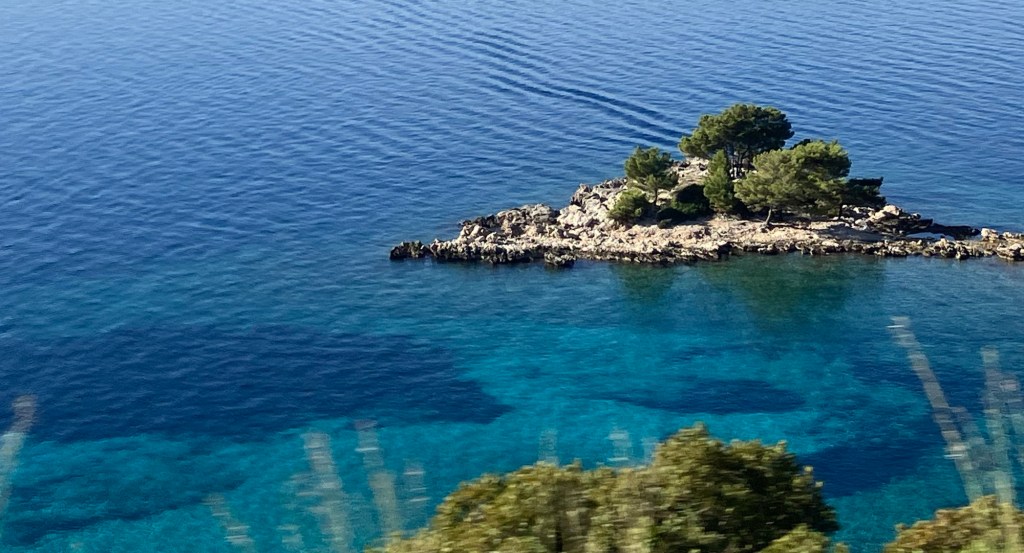


Our bus load of fellow cruisers boarded a small boat set up with tables, and we motored a short way to the “farm” where the owner had his oysters and mussels growing. His wife served up their homemade Grappa, a strong liqueur from grapes flavored with herbs, served in shot glasses.
After we tied up to the work platform, he got to work pulling up his strings of mussels and cooking them in a tasty broth on the boat while his wife explained all of the steps involved in oyster farming and raising them for three years before they can be harvested.
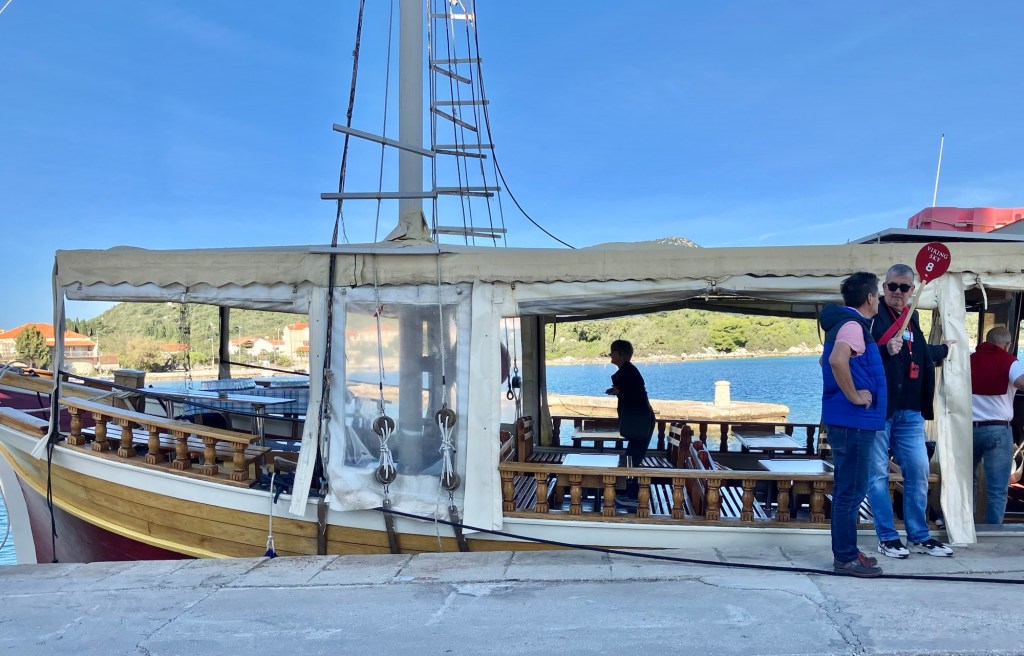


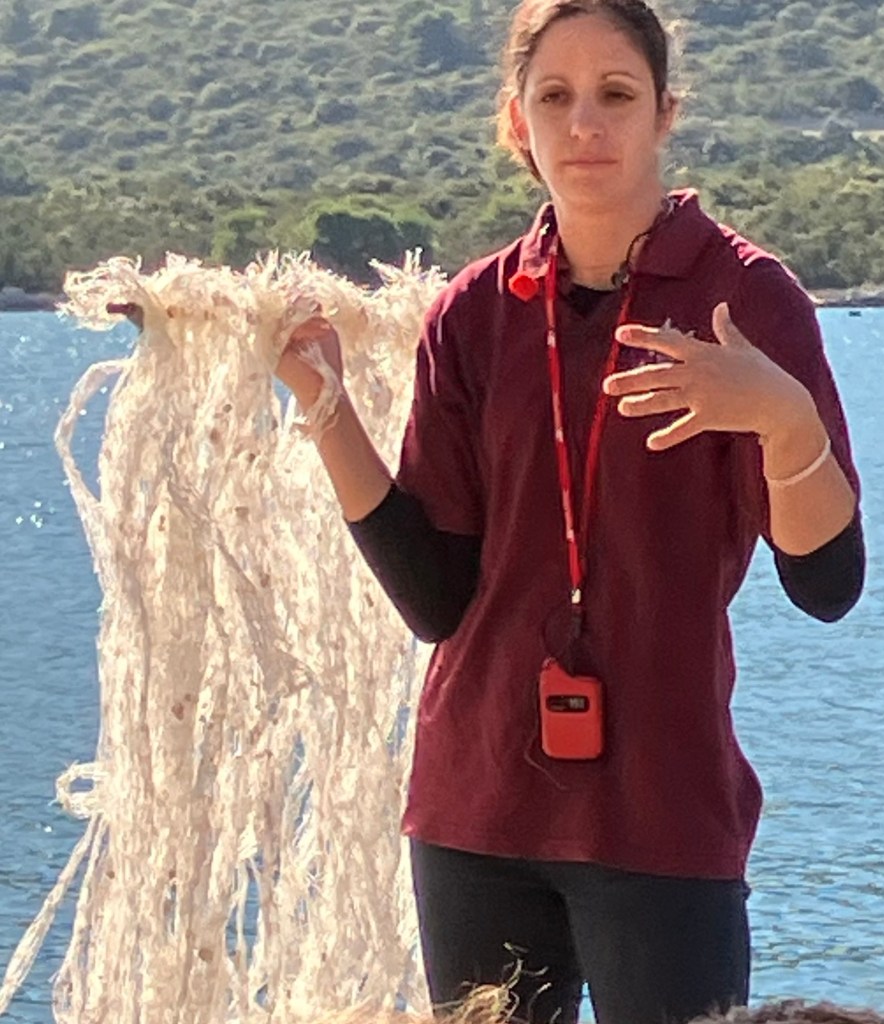

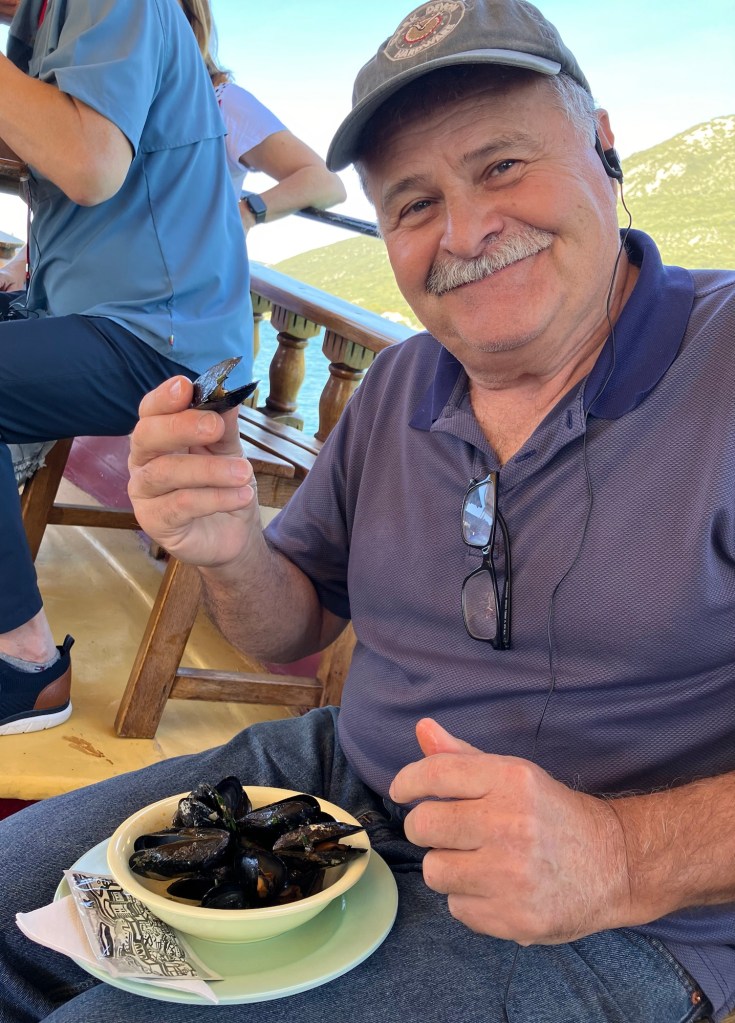
Since Viking said we would not be able to eat raw oysters due to increased Health and Safety requirements, we only ate the mussels which were cooked in a delicious herbal broth and served with bread and homemade white wine. Everybody got a bowl of mussels, and Ken dug in. I had two of his, since I’m not a fan!

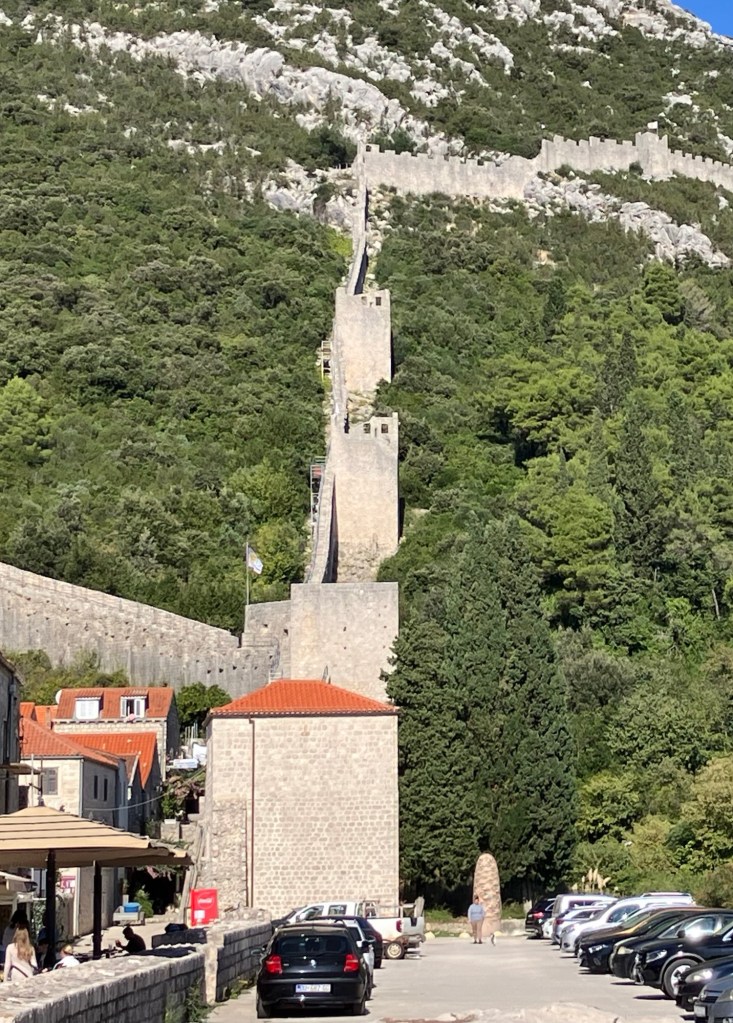
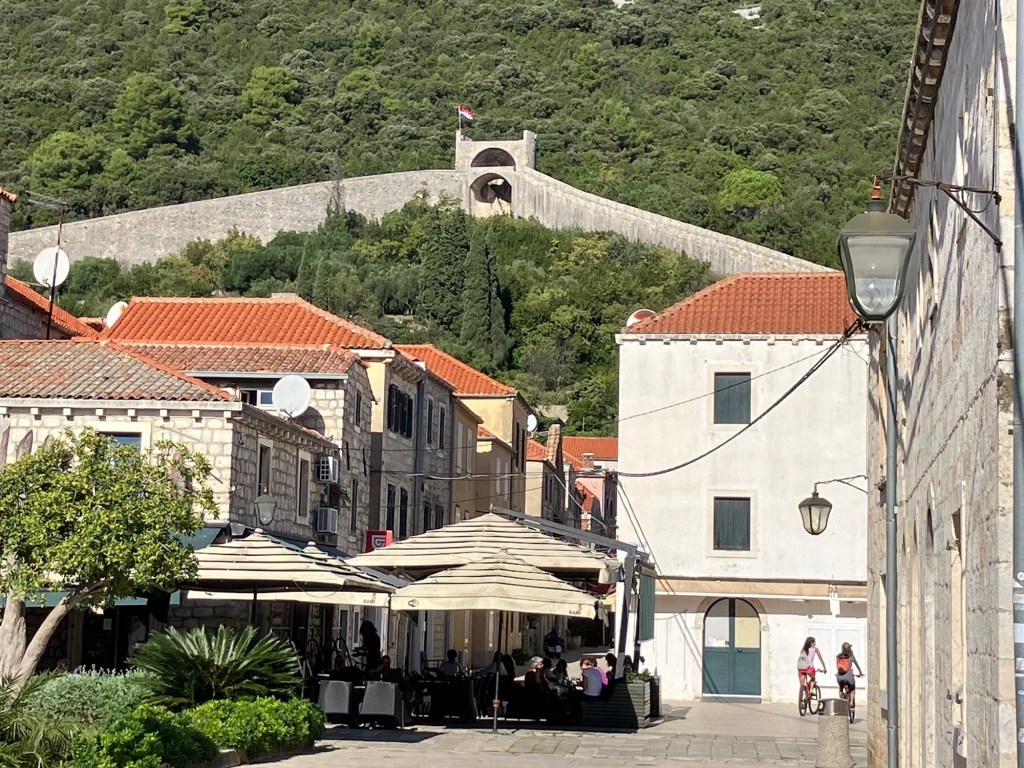
We piled back on the bus and then drove about a mile to the village of Ston, where the locals have harvested salt from salt pans since the Middle Ages. Salt was such a precious commodity that a 4.3-mile-long stone wall was built in the 14th and 15th centuries between Mali Ston and Ston and up the mountain and back down to the other side of Ston village with 40 towers and 5 fortresses all along it. It is called the European Great Wall of China. We didn’t have any wine here, but Ken had to sample the oysters, so we made a quick stop at a cafe for them, while I drank the Prosecco that came with it, and then we raced back to the bus!
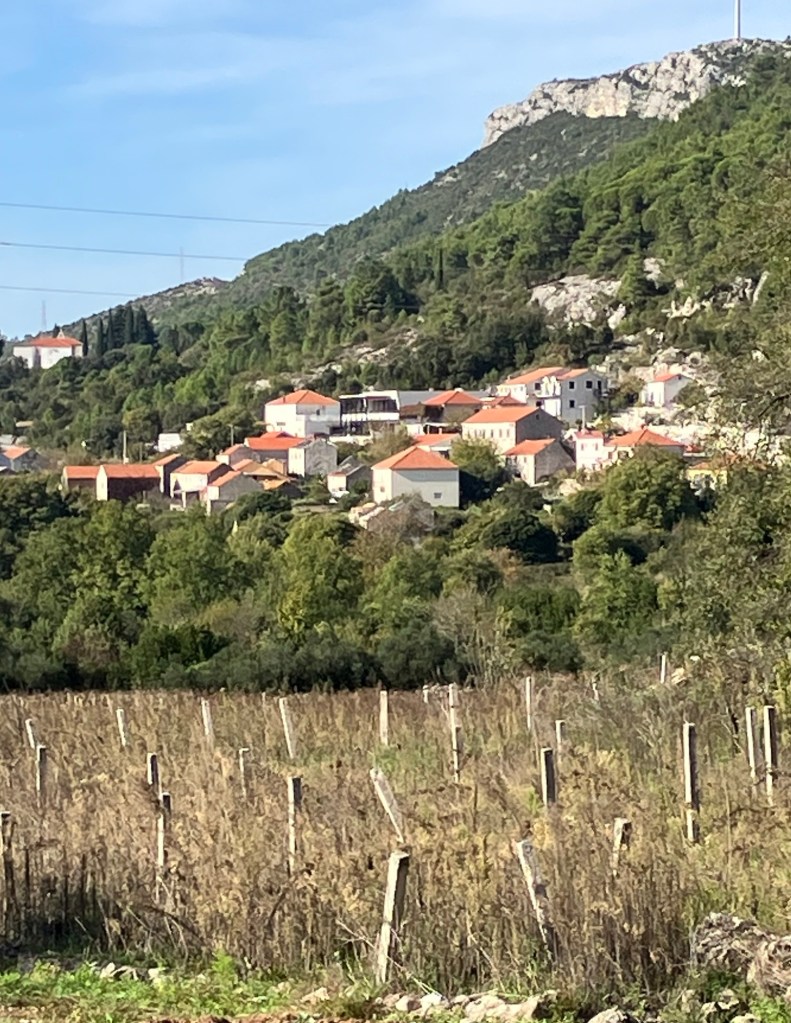
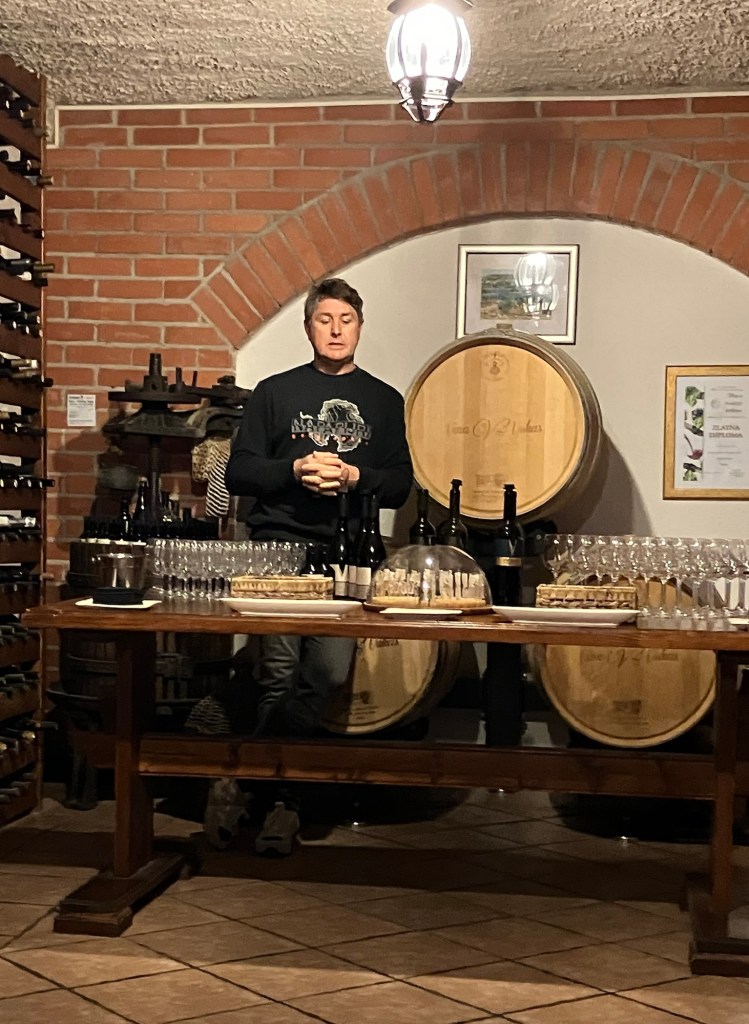
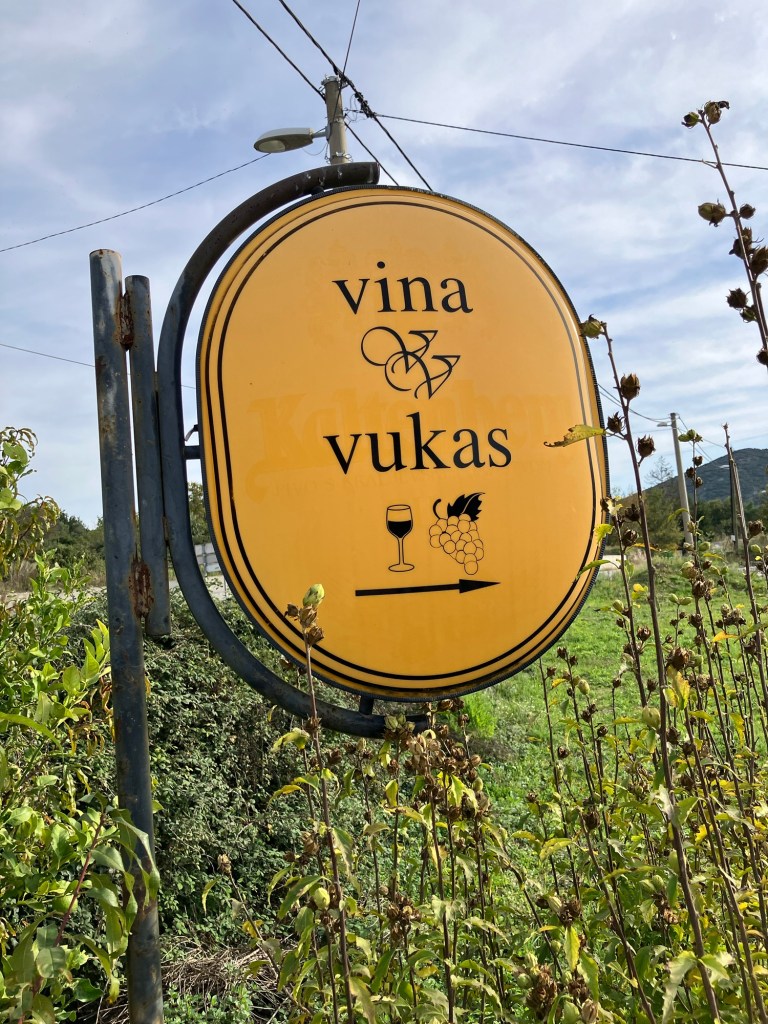
A short drive later past gnarly grape vines on the hillsides and olive trees everywhere, we came to a small home with a lovely kiwi-shaded pergola where we sampled homemade Grappas flavored with rose, lemon, pomegranate, and more! Then we went inside the winery to sample white and red wines with bits of bread and cheese and learned about the family winery. Again, production is small so the wines are all consumed by the families and local restaurants in the wider area.



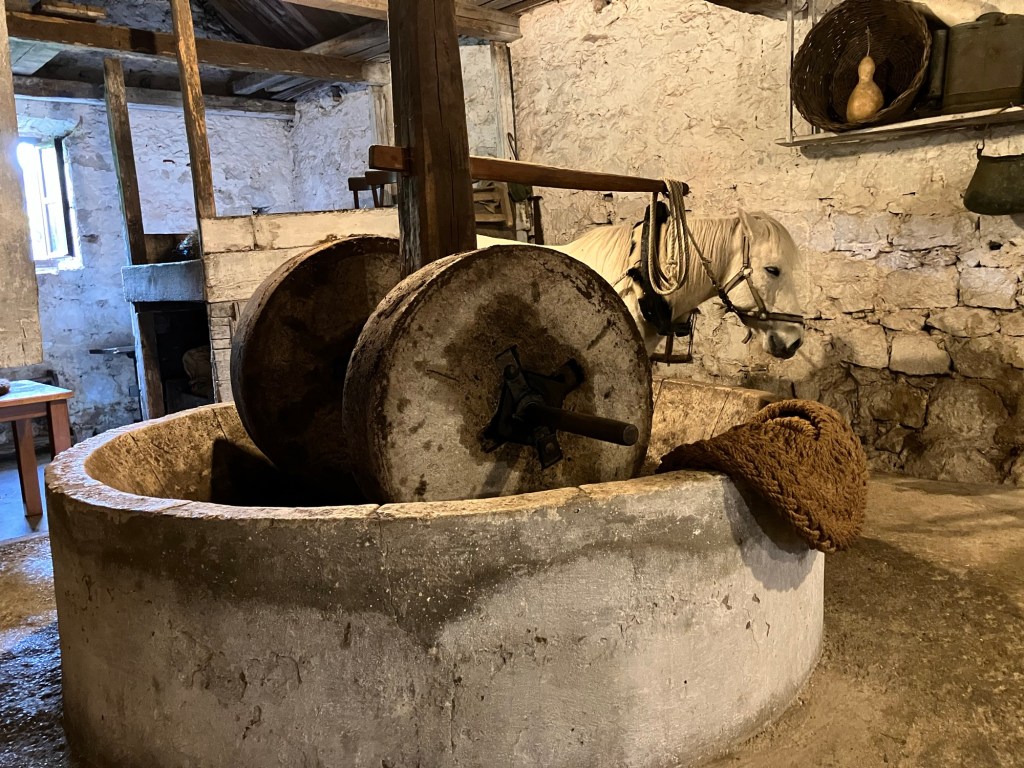
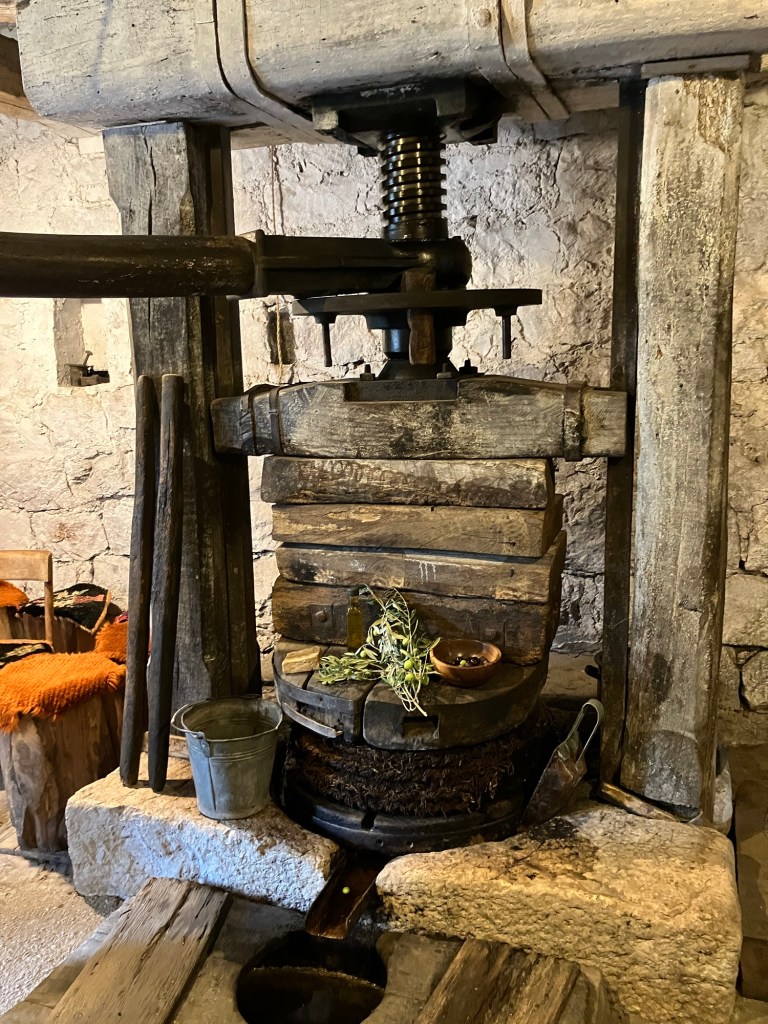
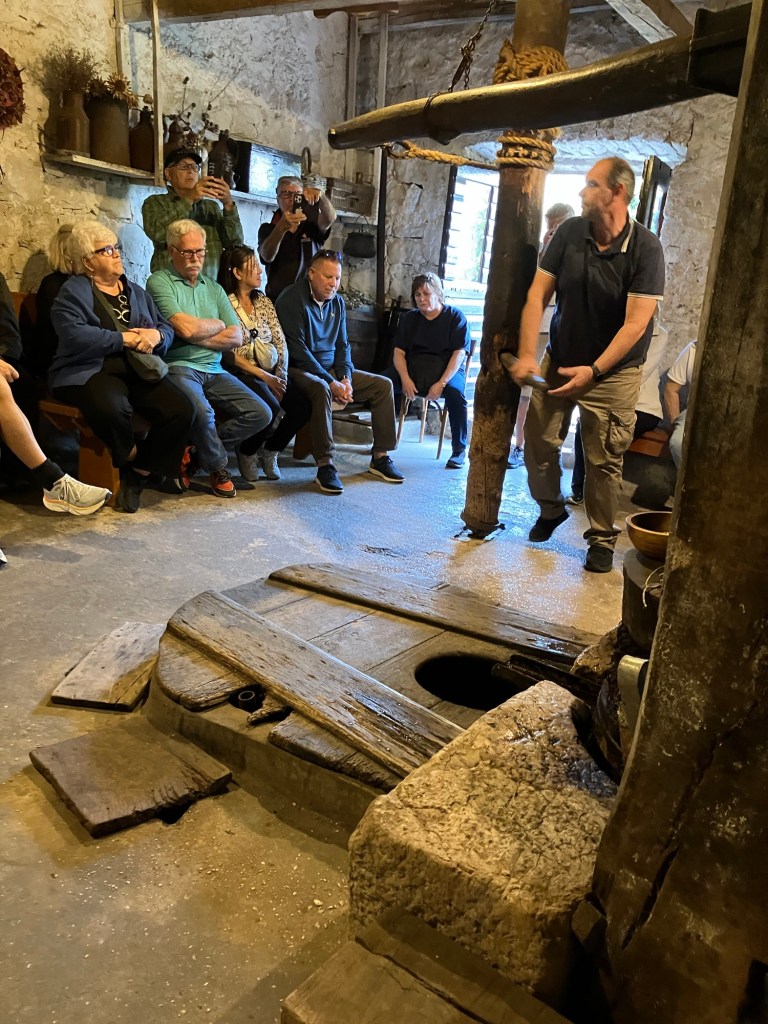
Back on the bus for another short drive through the countryside to another home and small olive oil producer. We were ushered into a small dimly lit ancient stone building smelling of hay and horse manure, with the source of the smell, a white horse named Perla (Pearl) standing quietly, harnessed to two huge round grinding wheels. The owner explained and demonstrated the steps involved in the oil production, beginning with Perla walking around and around mashing the freshly gathered green olives between the huge grinding stones (although she was on medical leave due to an injured leg, so she didn’t walk anywhere except back to her pasture afterwards!). Then the mashed olives are gathered in a woven basket and put in the 300-year-old press, where the two brothers push the long wooden handle back and forth ratcheting the huge screw and plate down to press the oil out. When they can’t move the long handle anymore, they insert smaller sticks as handles into the shaft and walk around in a circle like Perla, pressing out the last of the oil. After they have collected all the oil they can, they let the press sit overnight while the last of it drips into a cistern filled with water. The next day, they scoop out the oil floating on top of the water.
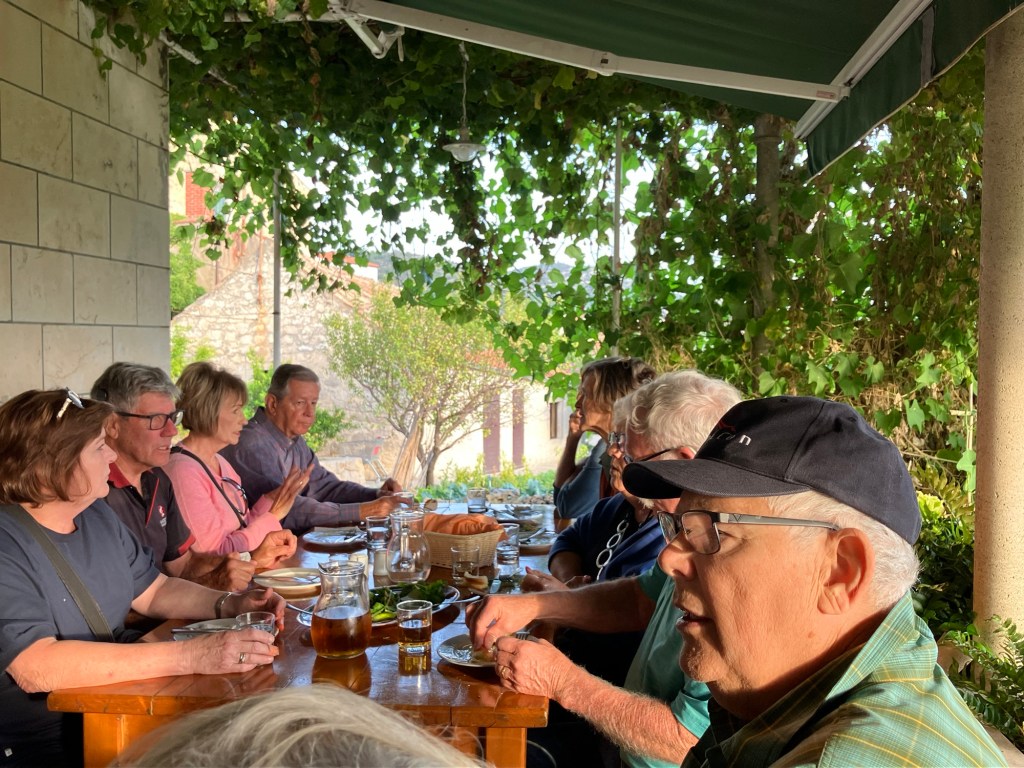
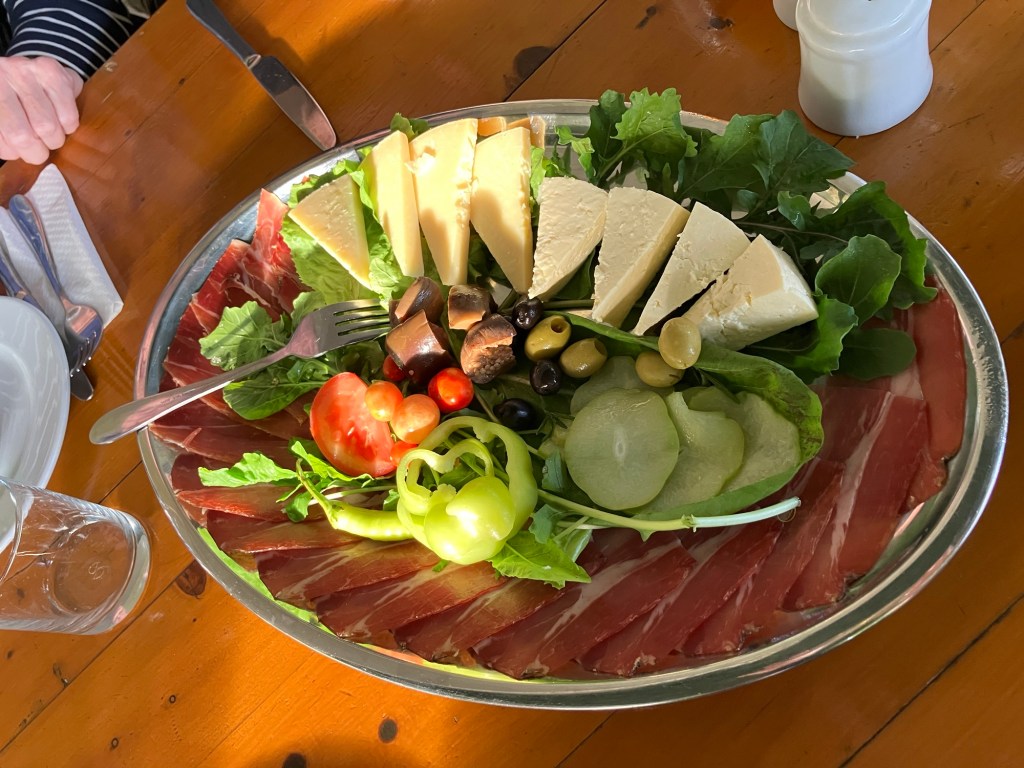
We were then led out and around the little pressing house up to the covered back porch of the home to picnic tables overlooking the sloping countryside to the sea, where we were served bread, olive oil, homemade wine, and a lovely relish tray with olives, cheese, Italian meats, greens, tomatoes, and eggplant.

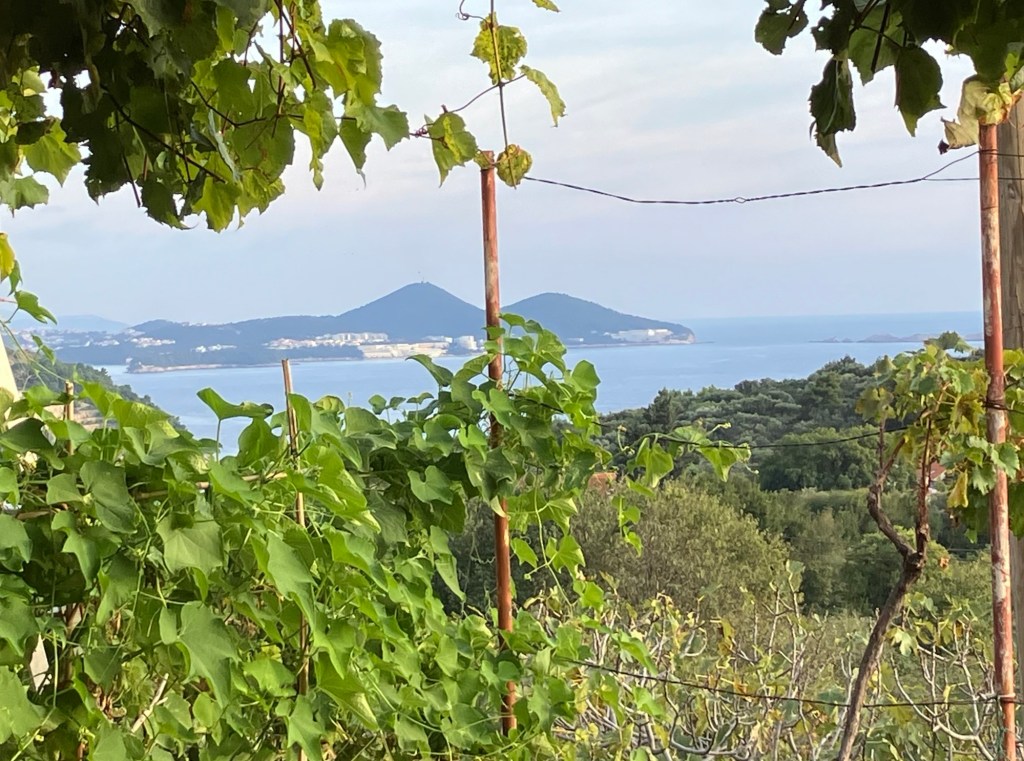


Then it was back on the bus to enjoy the scenic coastline drive back to the ship for a short rest before dinner (oh good, it’s time to eat again…!). We shoved off to Kotor, Montenegro at 10:00 pm.
 Tangible Roots
Leave a comment